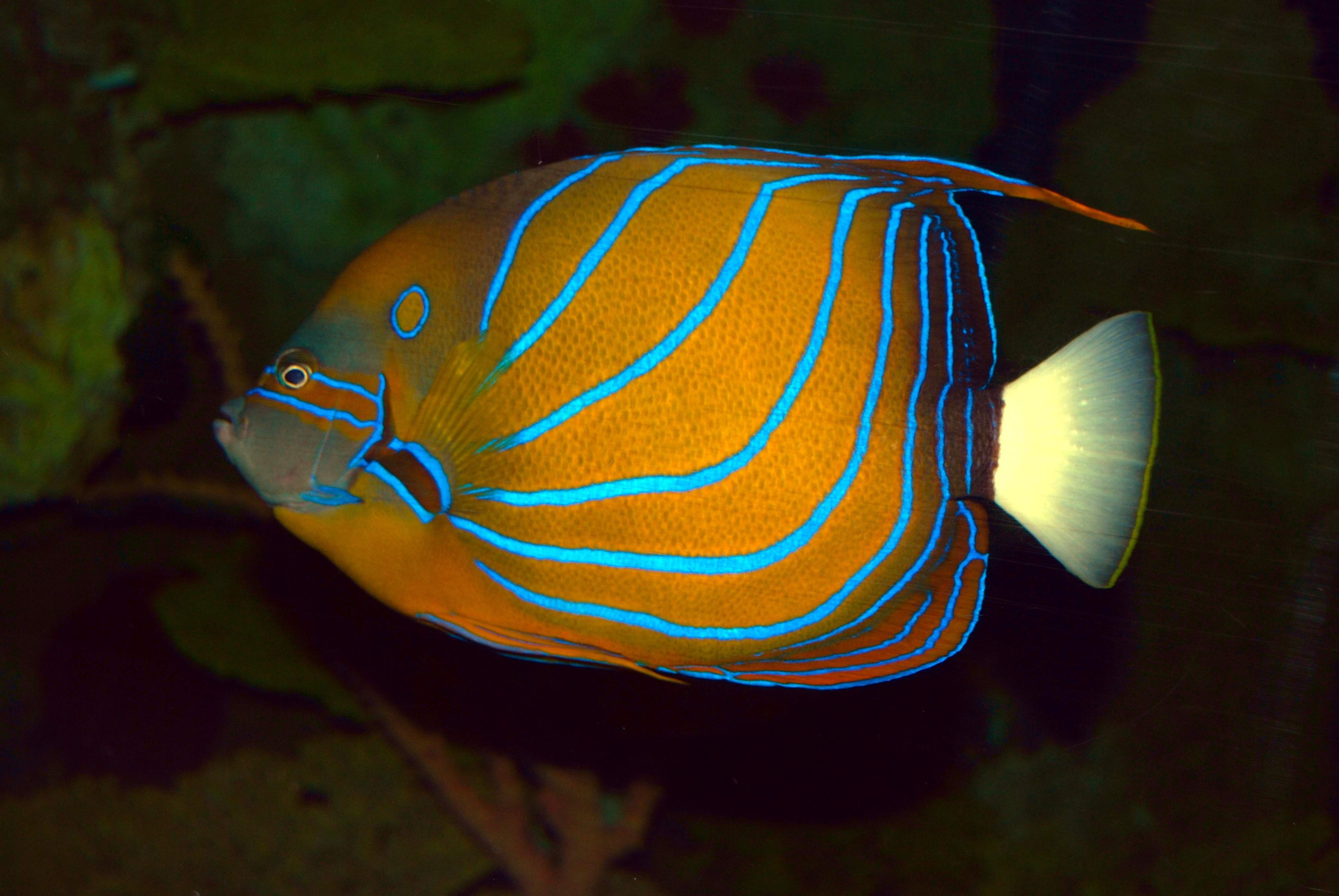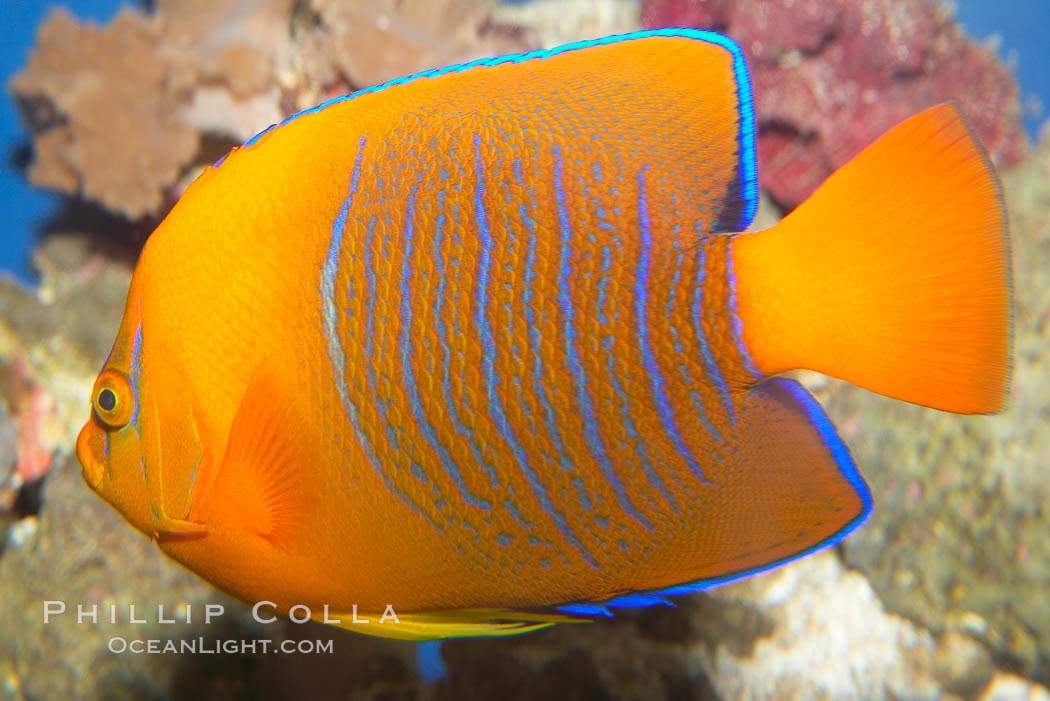
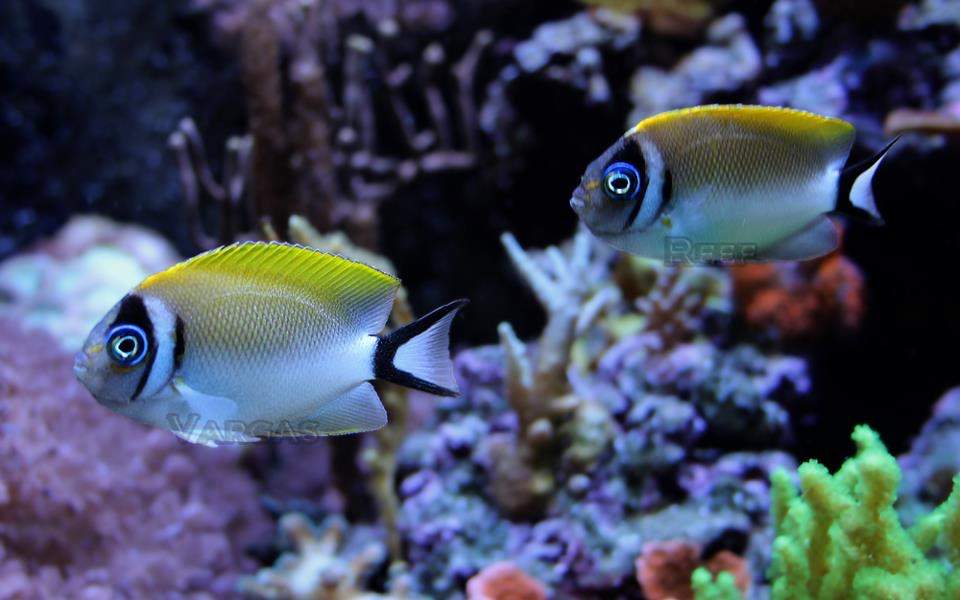
Japanese Angelfish (Genicanthus semifasciatus)
Fish in the family Pomacanthidae. Expert care. Reef Safe.
Quick facts
Appearance
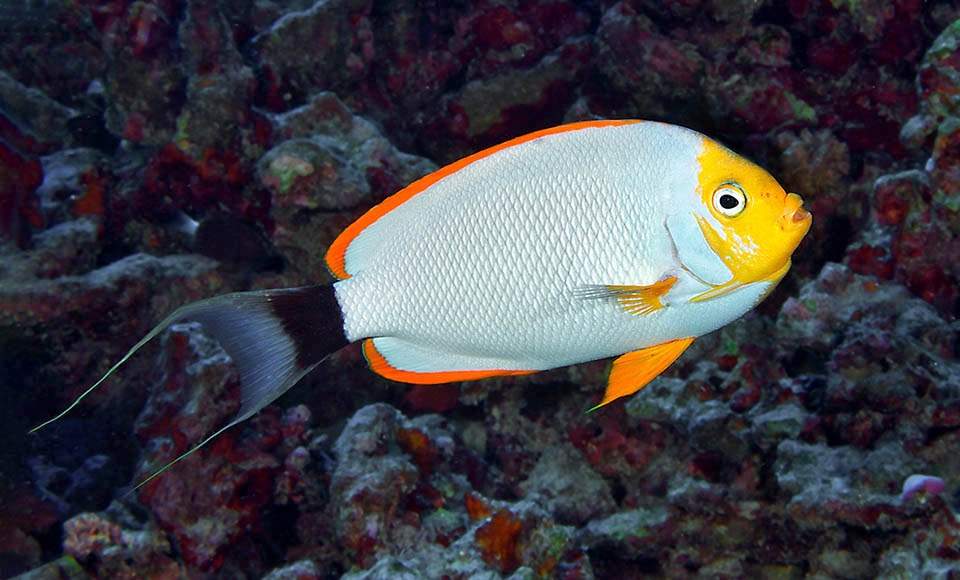
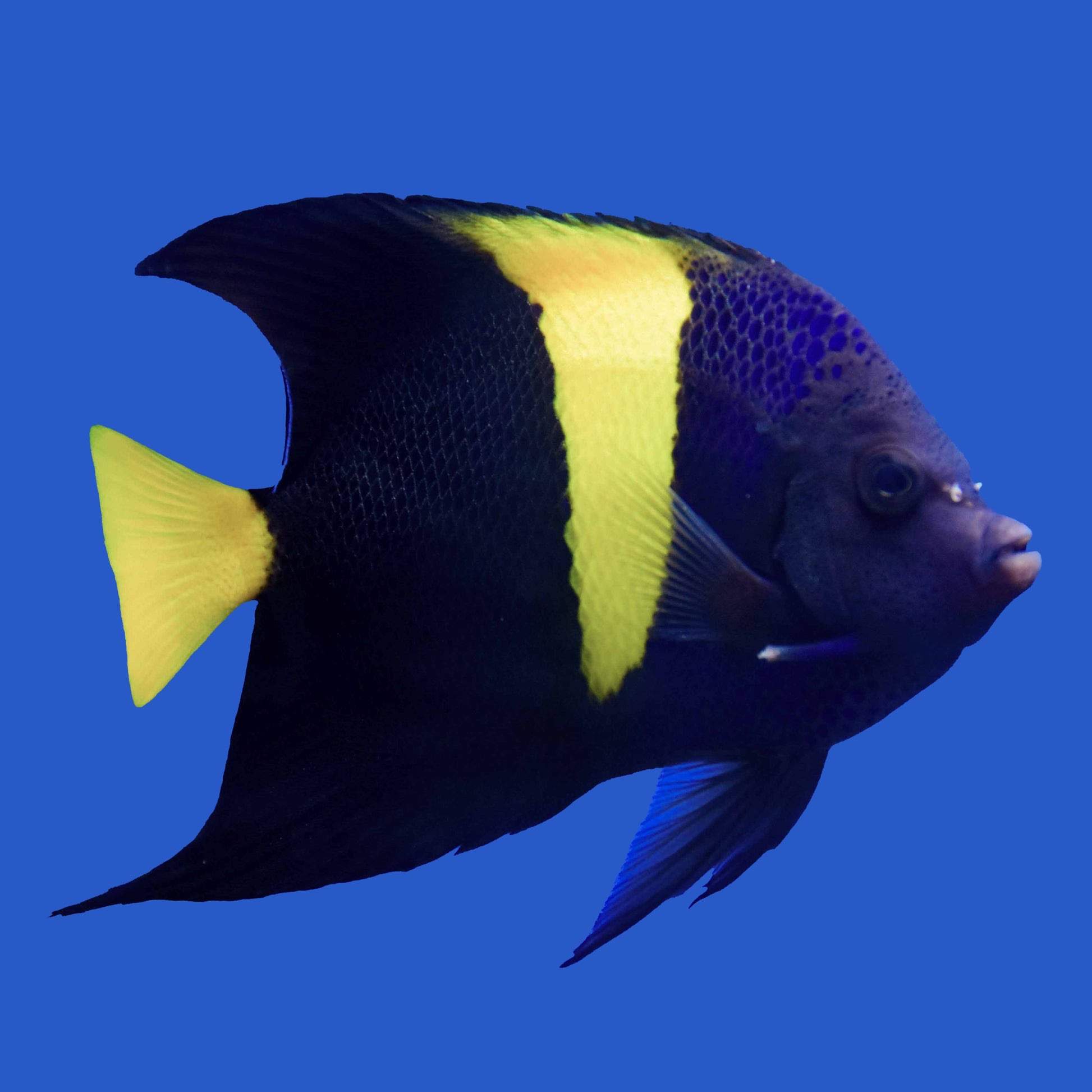
A striking small angelfish with a predominantly silvery-white body marked by distinctive vertical dark bands (typically 4–5 bands). The head is yellow-orange, and the dorsal and anal fins display yellow edging. The body shape is laterally compressed and disk-like, typical of pomacanthid angelfish.
Diet and feeding
Feeds primarily on zooplankton and small crustaceans in the wild. In captivity, offer high-quality frozen foods (mysis shrimp, copepods, brine shrimp) 2–3 times daily, supplemented with quality flake foods and occasional vegetable matter. Live copepod cultures help ensure proper nutrition.
Difficulty and care for the Japanese Angelfish
This deep-water angelfish demands excellent water quality, stable conditions, and specialized feeding. It is not suitable for beginners and requires significant husbandry experience to thrive long-term in captivity.
Common health issues
Nutritional deficiencies, parasitic infections (marine ich, velvet), HLLE (head and lateral line erosion), bacterial infections
Origin and habitat
Indo-Pacific region, found in coral reef environments from Indonesia to the Philippines and surrounding waters. Inhabits steep outer reef slopes at depths typically between 40–200 meters.
Log Japanese Angelfish in your reef tank
Reef Trak gives you the full record on every species in your tank: acquisition date, source, photos, parameters at time of stocking, and links to maintenance and feeding events. Track Japanese Angelfish alongside everything else in your reef.
Related Fish