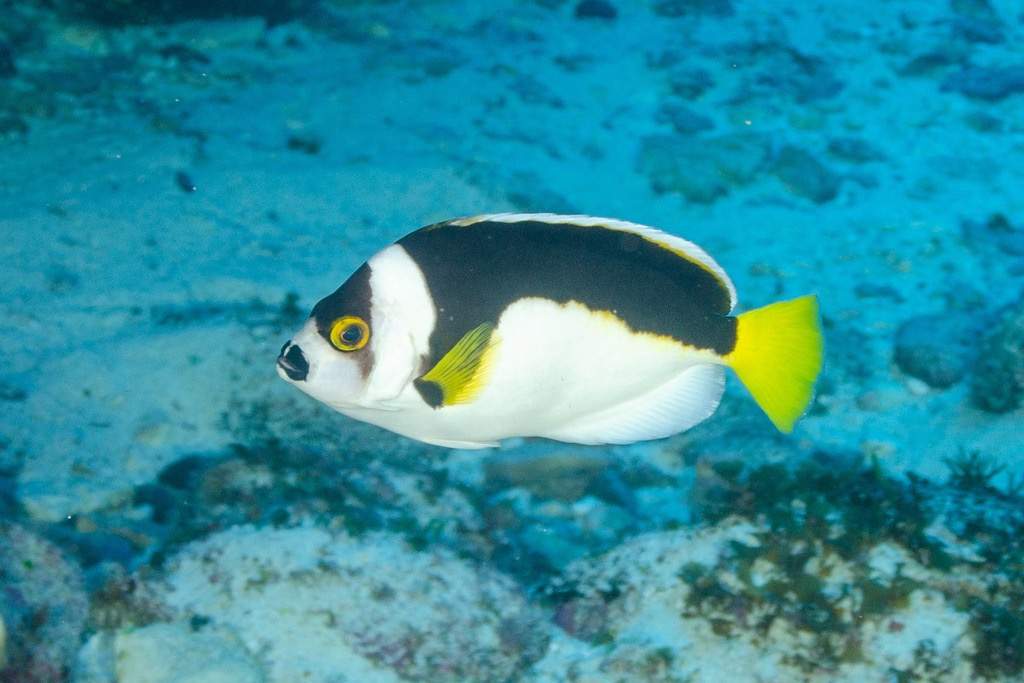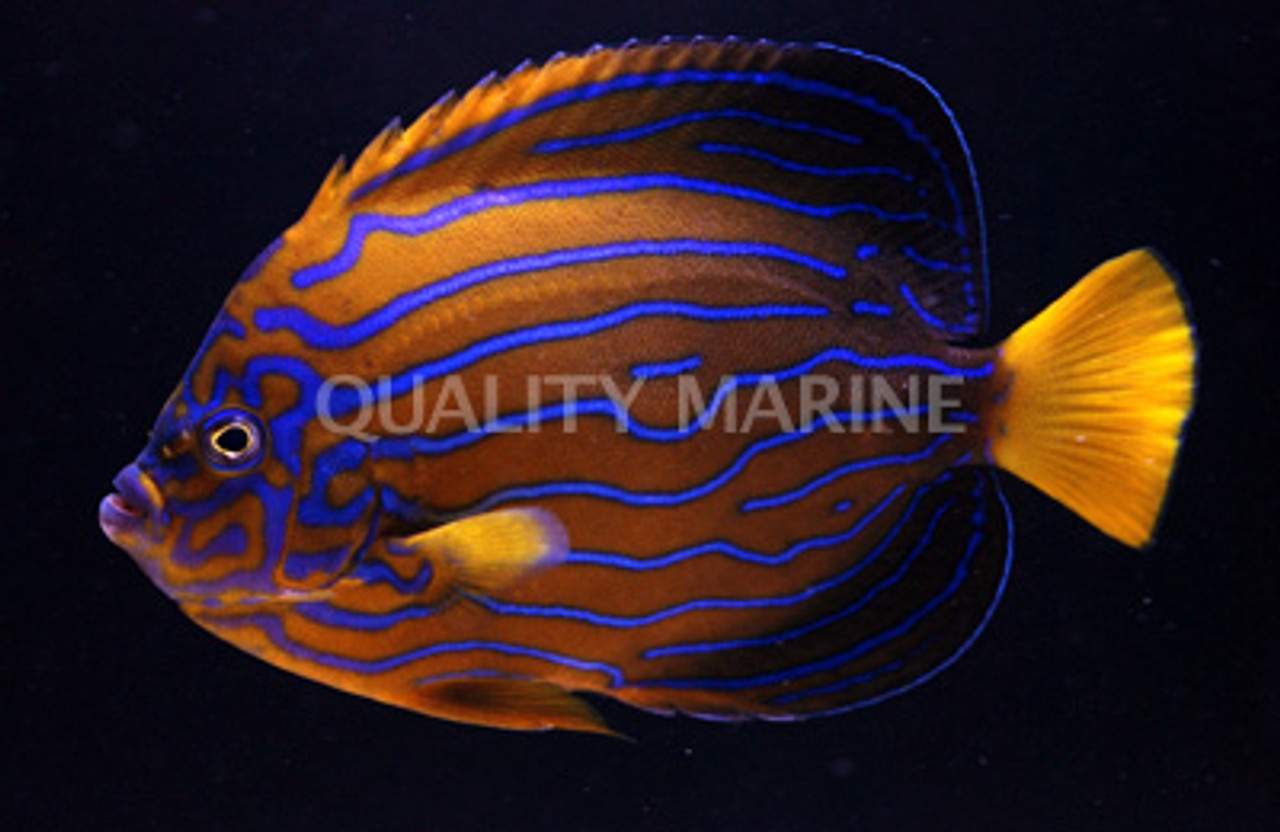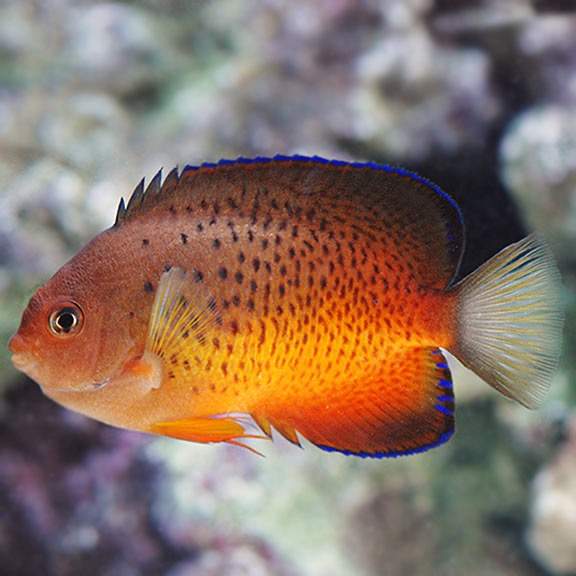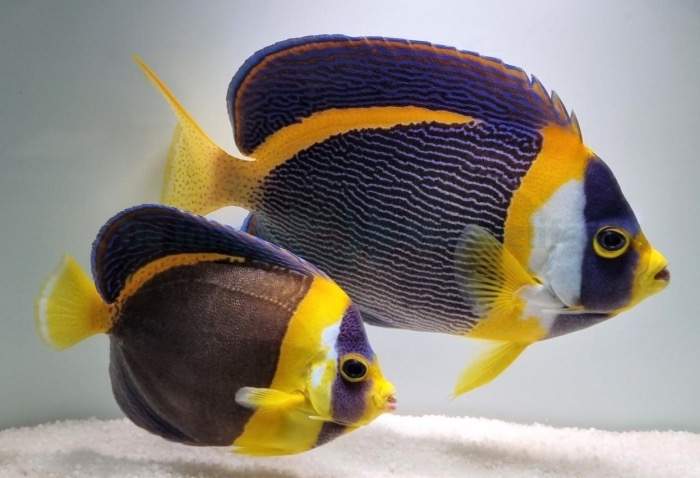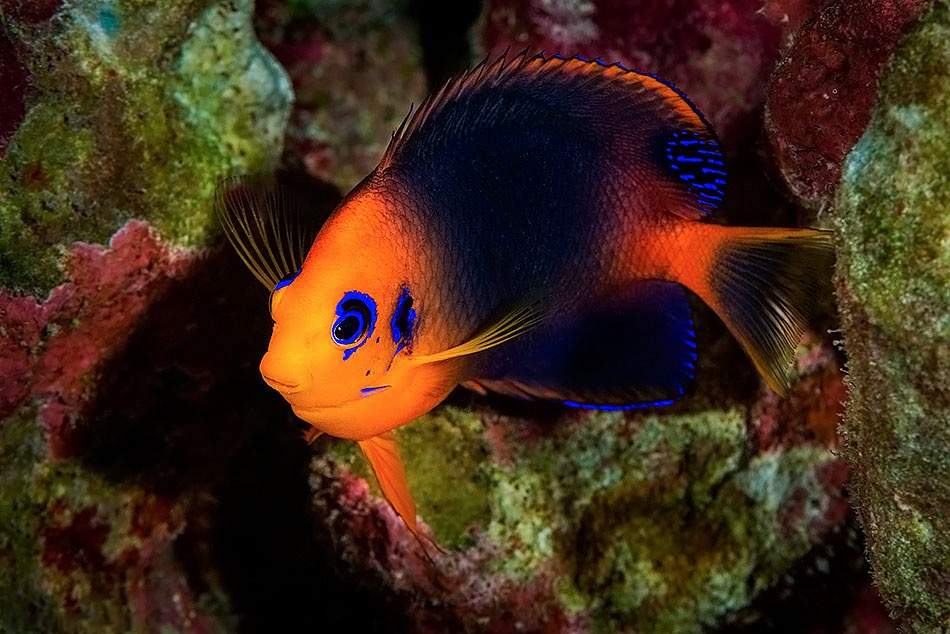
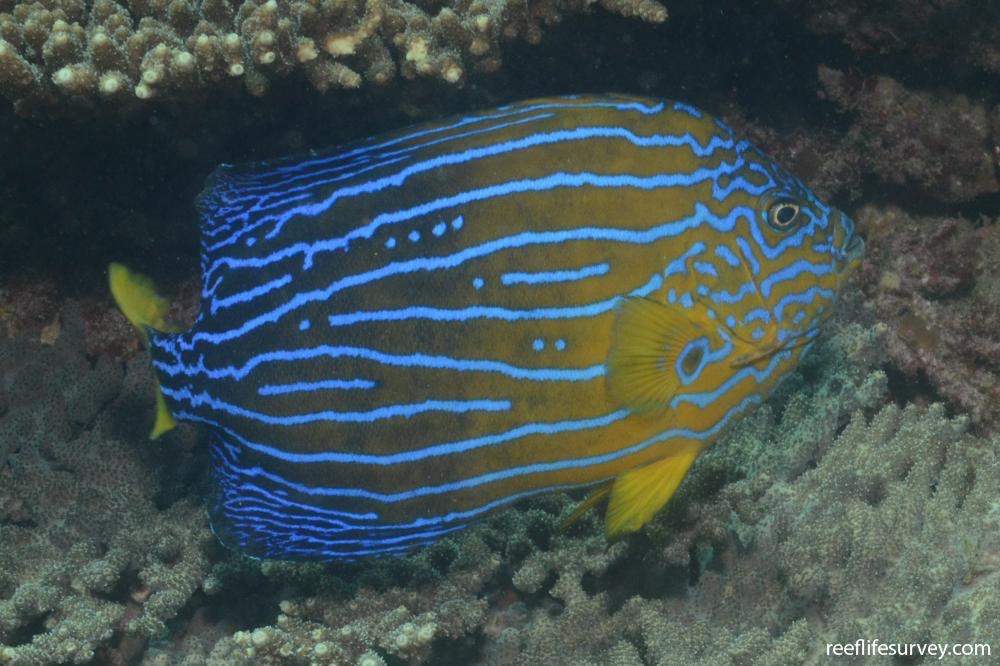
Bluestriped Angelfish (Chaetodontoplus septentrionalis)
Fish in the family Pomacanthidae. Hard care. Not Reef Safe.
Quick facts
Appearance
The Bluestriped Angelfish displays a striking dark blue to black body with bright yellow or white vertical stripes running along its flanks. It has a compressed, disc-like body shape typical of pomacanthid angelfish, and adults develop a characteristic rounded dorsal and anal fin profile.
Diet and feeding
In the wild, Bluestriped Angelfish feed on sponges, tunicates, and small crustaceans. In captivity, they are notoriously picky eaters; offer a varied diet of high-quality sponge-based pellets, frozen mysis shrimp, enriched Artemia, and live rock with natural fauna. Frequent small feedings often succeed better than larger meals.
Difficulty and care for the Bluestriped Angelfish
This species is challenging for most hobbyists due to its specific dietary and water-quality requirements, reluctance to feed in captivity, and susceptibility to parasitic diseases. Only experienced aquarists with well-established systems should attempt captive care.
Common health issues
Parasitic infections (ich, marine velvet), bacterial infections from capture stress, feeding difficulties, fin rot
Origin and habitat
Indo-Pacific region, from the Philippines and Indonesia westward through the Indian Ocean to the Red Sea and East Africa, with populations also recorded from Sri Lanka and the Andaman Sea.
Log Bluestriped Angelfish in your reef tank
Reef Trak gives you the full record on every species in your tank: acquisition date, source, photos, parameters at time of stocking, and links to maintenance and feeding events. Track Bluestriped Angelfish alongside everything else in your reef.
Related Fish