The short answer
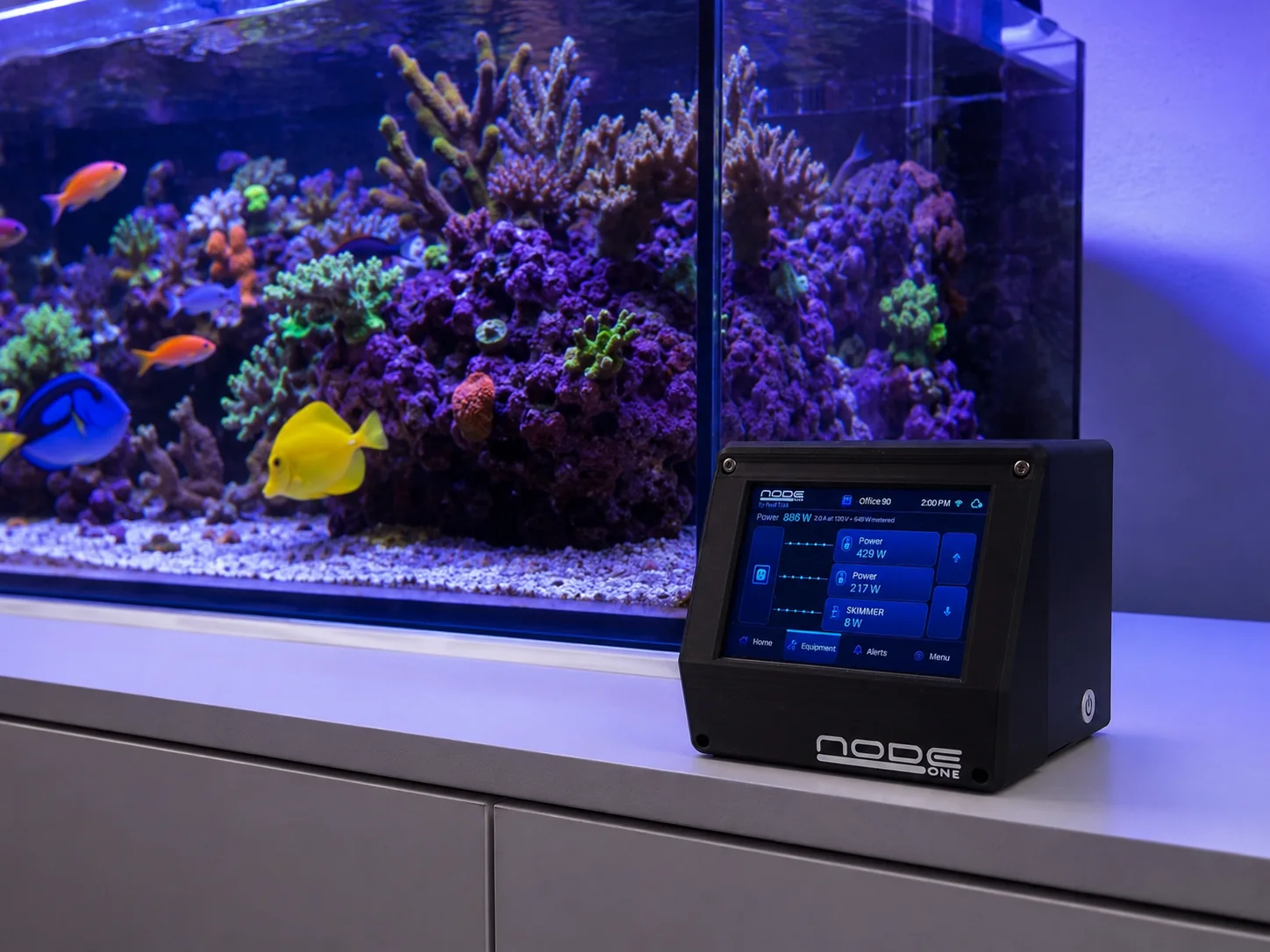
Node ONE is not a tablet. It is an always-on local aquarium server with a built-in touchscreen. It lives beside the reef, connects compatible controllers, cameras, smart plugs, feeders, sensors, and automation devices, gathers supported data around the clock, and turns it into one reef-specific dashboard.
At home, the built-in Node OS screen and local browser show what the hub is collecting. When you are at work or anywhere else, Reef Trak can carry selected readings and reef history to your phone or browser. Node ONE keeps doing the work beside the aquarium.
In practical terms, Node ONE combines a reef equipment hub, a local data server, a dedicated dashboard, supported equipment control, and a bridge to Reef Trak in one system. It is designed for reef keepers who want connected equipment without building and maintaining a do-it-yourself server project.
Technical reef keepers can build a computer around Home Assistant themselves. Node ONE is intended to turn those installation, integration, dashboard, update, and support tasks into a dedicated appliance experience.
The approved promise is simple: You set it up. We take it from there.
The problem: every part of the reef speaks a different language
A modern reef can contain a controller, automated tester, dosing system, lights, return pump, power-monitoring plugs, leak sensors, temperature probes, cameras, and battery backup. Many of those products are smart, but they are not necessarily smart together. One app shows the controller. Another shows the lights. Another shows power. A web portal shows a test result. A notification arrives from somewhere else.
The result is not one system. It is a collection of islands. The reef keeper has to remember which app owns which device, which account is still signed in, which graph matters, and whether a missing reading means the tank changed or one vendor service stopped responding.
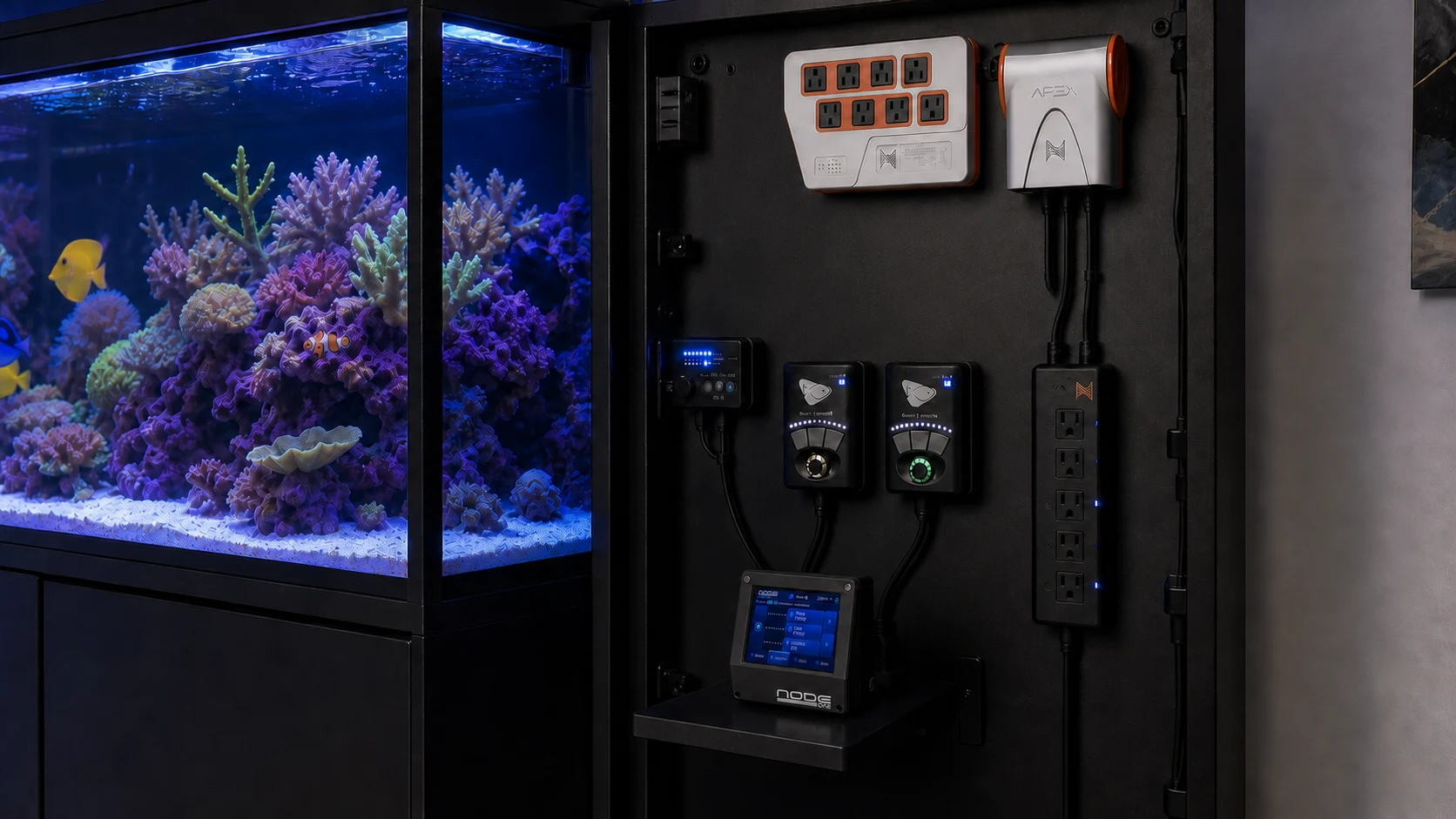
Node ONE is the central hub above those individual systems. Compatible equipment keeps doing its original job while Node ONE continuously collects supported data, organizes it around the aquarium, provides supported controls, and gives the reef keeper one consistent view.
The touchscreen is built in. The server is the product.
Behind the screen is a full Raspberry Pi 5 computer running Node OS. Node ONE is a local integration hub, data collector, history store, dashboard, supported control surface, and bridge to Reef Trak. The touchscreen is simply the most convenient way to use it while standing at the aquarium.
Underneath the reef-specific experience is a complete Home Assistant installation, because Home Assistant already provides a mature way to represent devices from many manufacturers. Node ONE turns that foundation into an aquarium product, so normal use does not begin with a blank server and a pile of community instructions.
Node ONE is not a replacement for a Neptune Apex, CoralVue HYDROS, ReefBeat system, doser, relay box, or probe interface. Those products remain responsible for their own hardware and safety functions. Node ONE is also not a promise that every aquarium product will work. Compatibility will expand device by device and will be claimed only after the path is tested.
Node OS can turn compatible switch entities, including supported smart plugs and pump switches, on or off from the appliance or its local browser. It confirms the reported state and uses power telemetry where available. Failed commands are shown clearly and never retried automatically.
How the information moves
That separation matters. Existing controllers keep their own programming and safeguards. Node ONE gathers supported observations, gives them aquarium meaning, and controls compatible switch entities locally. Reef Trak carries selected tank information beyond the local screen.
The everyday path is equipment to Node ONE to Reef Trak. Each stage has a different job.
| Stage | What happens |
|---|---|
| 1. Equipment | A supported controller, monitor, plug, sensor, light, pump, or other device reports the information its integration exposes. |
| 2. Local integration | Node ONE receives supported data through local or vendor-specific integrations and keeps the integration and control engine in the home. |
| 3. Reef dashboard | Node ONE groups readings by tank and equipment role, shows current status, provides local history, and presents supported controls where available. |
| 4. Away from home | Selected supported data reaches the paired Reef Trak tank, so you can check readings and history from work or anywhere else while Node ONE keeps running beside the aquarium. |
Example flows
These examples describe the supported equipment pattern. Exact readings and controls depend on the device and verified integration.
| Source | Node ONE view | Reef Trak result |
|---|---|---|
| Neptune Apex | Supported telemetry such as temperature, pH, ORP, outlet state, and other exposed readings can be organized around the tank. | Selected readings can appear with the tank record in Reef Trak instead of remaining isolated in a controller screen. |
| Metering smart plug | Node ONE can turn a supported plug on or off, confirm its reported state, and use measured power to check the result where available. | A reef keeper can check selected equipment status from the same Reef Trak experience used for parameters, maintenance, and livestock. |
| Leak or environmental sensor | A compatible local sensor can be assigned to the aquarium area instead of remaining an anonymous smart-home entity. | The reading can travel with the tank context, subject to the supported data and sharing choices. |
| Supported pump switch | Available state, power telemetry, and local on/off control can be grouped around the equipment role in Node OS. | Selected equipment information can join the tank history while Node ONE keeps the switching path local. |
Why the box lives beside the reef
A cloud-only dashboard depends on the internet and on every vendor service between the tank and the screen. Node ONE keeps the integration engine at home, close to the equipment it observes. When an integration supports direct local communication, the path can stay on the home network instead of taking a round trip through a manufacturer cloud.
The local touchscreen also gives the aquarium a permanent status display. You do not have to find a phone, unlock it, open an app, choose a tank, and navigate to the right screen just to see whether temperature and return-pump power look normal. Favorites can stay on Home, equipment can be browsed by group, and a reading can open into history when something deserves attention.
At home, the same Node ONE experience is also available through a browser on the local network. The browser has more room for equipment, readings, history, and system status, while the touchscreen remains optimized for quick glances and large taps beside the aquarium.
Node ONE and Reef Trak have different jobs
Node ONE is the always-on server in the house. Reef Trak is the reef-management system that travels with you. Reef Trak combines parameters, livestock, equipment records, maintenance, dosing, expenses, photos, controller imports, reports, and long-term history. Node ONE keeps collecting beside the tank and sends selected supported device data into that record.
This is why Node ONE is more than a tiny screen running a generic dashboard. The equipment has to be understood as aquarium equipment. A 42-watt plug is not useful by itself. It becomes useful when the system knows it belongs to the return pump on the display tank, knows where the normal pattern has been, and presents it beside the other life-support information a reef keeper cares about.
Why not just build a Home Assistant box?
You absolutely can. Home Assistant is open, capable, and designed to run on hardware in the home. A technically comfortable owner can choose a computer, install Home Assistant OS or another supported installation type, research integrations, add devices, name entities, build dashboards, configure remote access, manage backups, and troubleshoot every layer. For some people, that project is part of the fun.
If that is you, Node ONE may not be necessary. The product is for the reef keeper who wants the benefit of a local integration platform without beginning with an empty Home Assistant installation. The intended experience is reef-specific onboarding, curated compatibility, understandable device selection, a known software environment, a dedicated display, and Reef Trak presentation.
Node ONE does not hide the underlying computer from an owner who wants it. An Advanced Home Assistant entry point remains available for technical users. The difference is that advanced administration is an option rather than the front door.
Privacy: selected tank data, not the whole house
Home Assistant runs on hardware in the home and favors local communication when a device supports it. Node ONE builds on that local-first model, but the Reef Trak bridge adds a stricter selection boundary: only devices and readings chosen for the aquarium are eligible to leave the home through the bridge.
The design does not call for uploading the complete Home Assistant device registry, local network addresses, Home Assistant credentials, person names, or unrelated household devices. Pairing uses Reef Trak credentials and scoped tokens rather than exposing the Home Assistant administration port directly to the internet.
The owner should always be able to understand which tank is paired, which devices are selected, and how to revoke the connection. Privacy is not a one-time promise hidden in setup. It is part of the device-selection model.
The benefits
- One always-on local server for supported equipment from more than one ecosystem
- A built-in touchscreen beside the aquarium for glanceable status and control
- A larger local browser view on phones, tablets, and computers in the home
- Local on/off control for supported smart plugs and pump switches, with response confirmation
- Selected supported data available through Reef Trak from work or anywhere else
- Equipment organized by tank and role instead of raw smart-home entity names
- Local history and trends that help distinguish a changing reef from a disconnected device
- A guided appliance path for people who do not want to build and maintain a home server
- An Advanced Home Assistant path for owners who do want the underlying platform
- No Reef Trak subscription required for the core local Node ONE experience
The tradeoffs and current limits
An integration hub creates value by connecting systems, but it also sits in the middle of them. Honest status matters. Node ONE needs to show when the source device is offline, when the local integration is stale, when Reef Trak sync is paused, and when the last reading is too old to trust. A dashboard that quietly displays yesterday’s number as if it were live is worse than no dashboard.
- Compatibility is not universal and will be published only after each integration is verified
- Some equipment depends on community integrations or manufacturer clouds that can change
- Supported control is limited to verified switch entities and does not replace a controller or its independent safeguards
- A network, the Node ONE appliance, the source device, and its integration can each fail and need clear offline states
- A technical DIY owner may already have the skills and hardware to build a similar Home Assistant foundation
- The interface, enclosure details, compatibility list, and release process are still being finalized
Choose the Node ONE that fits your reef
Node ONE is available in four touchscreen sizes, from the compact 7-inch model through the 27-inch Orca. Every size runs the same Node OS server and reef dashboard experience; larger models provide more screen space, not a different product category.
Reef Research Labs publishes current pricing, configuration options, and conservative production timing on the Node ONE store. Compatibility continues to expand device by device and is claimed only after each path is verified.
Images on this page show the current product direction. Enclosure finishes and interface details may continue to improve as production advances.
Who Node ONE is for
Node ONE is for the reef keeper who has useful equipment but does not want reef status scattered across unrelated apps. It is for the person who wants an always-on server beside the tank, one built-in dashboard at home, selected information in Reef Trak when away, and a guided product instead of an open-ended server project.
It is also for the technically curious owner who likes Home Assistant but wants an aquarium-specific layer with a known starting point. Advanced access remains available without requiring every household member to understand integrations, entities, dashboards, and network administration.
It is probably not for someone who already has a carefully maintained Home Assistant server, a dashboard they love, a remote-access plan, working backups, and no interest in a Reef Trak-specific appliance. That is not a failure of the product. It is the boundary that makes the value clear.
For everyone else, the promise is clearer: one hub for your entire reef.