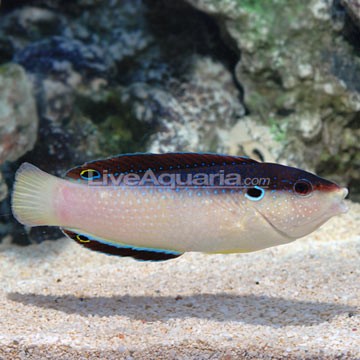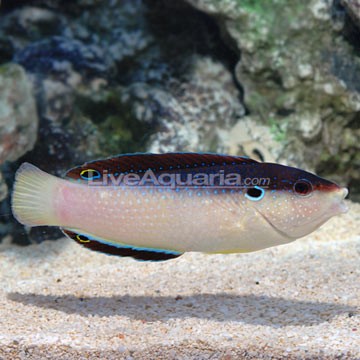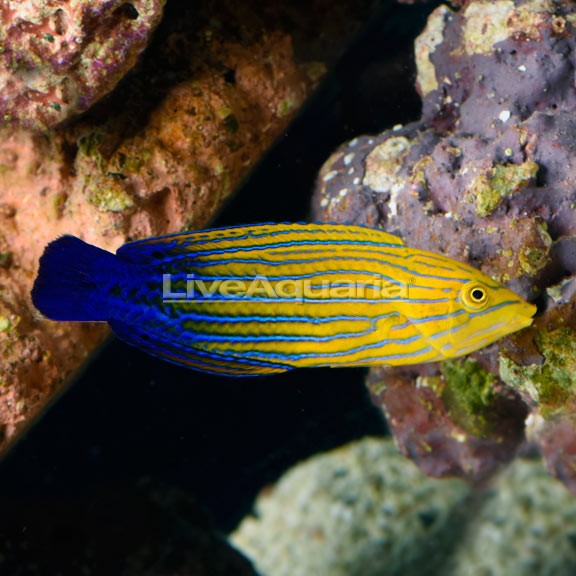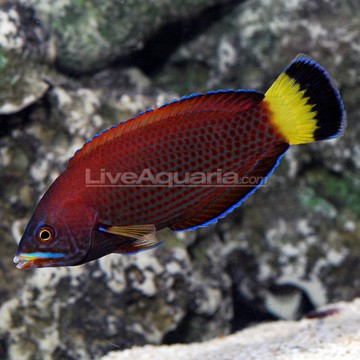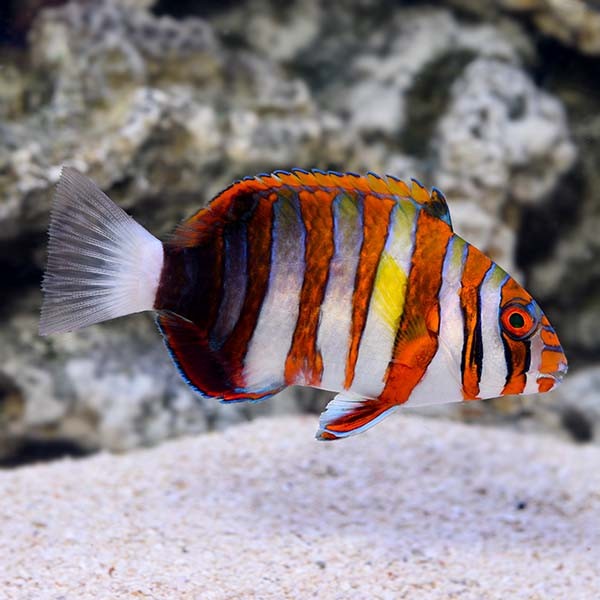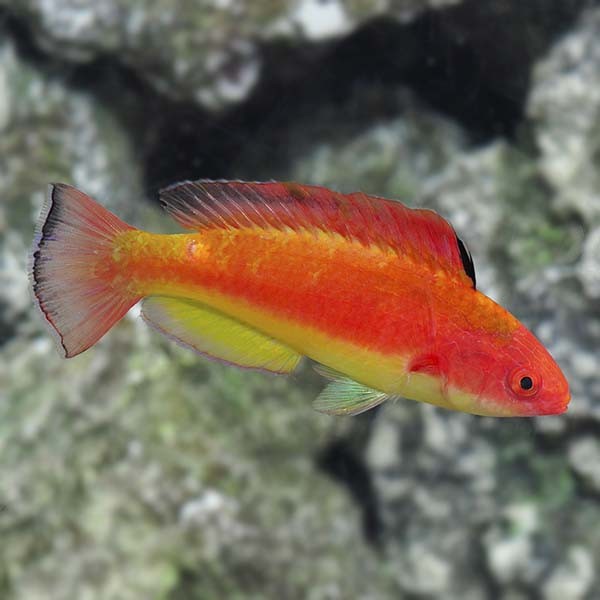
Blue Star Leopard Wrasse (Macropharyngodon bipartitus)
Fish in the family Labridae. Expert care. Reef Safe with Caution.
Quick facts
Appearance
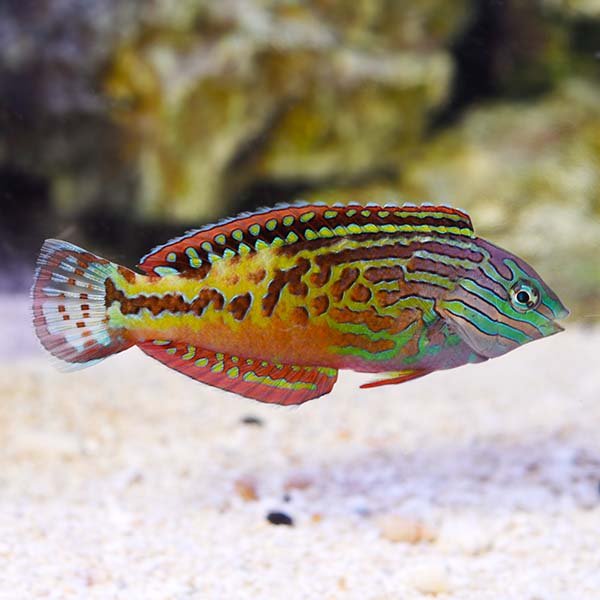
Males display brilliant turquoise-blue coloration with red spots and stripes on the head and body, while females are predominantly orange-red with white bands. Both sexes have the characteristic wrasse body shape—elongated and streamlined with pointed snouts used for hunting small prey in substrate.
Diet and feeding
Primarily a carnivore that feeds on small crustaceans, copepods, and mysis shrimp in captivity. Offer small-sized prepared foods or frozen foods multiple times daily to match its natural feeding behavior of constant grazing on the reef.
Difficulty and care for the Blue Star Leopard Wrasse
Moderate - Requires established tank with plenty of microfauna. Best suited for intermediate aquarists.
Common health issues
Marine ich, Fin rot, Swim bladder disorder, Bacterial infections, Parasitic infestations
Origin and habitat
Indo-Pacific region from Indonesia to the Philippines and westward to the Great Barrier Reef.
Keeper notes
Often more common than Meleagris Leopard Wrasse. Requires established tank with plenty of microfauna. May bury in sand when stressed.
Log Blue Star Leopard Wrasse in your reef tank
Reef Trak gives you the full record on every species in your tank: acquisition date, source, photos, parameters at time of stocking, and links to maintenance and feeding events. Track Blue Star Leopard Wrasse alongside everything else in your reef.
Related Fish