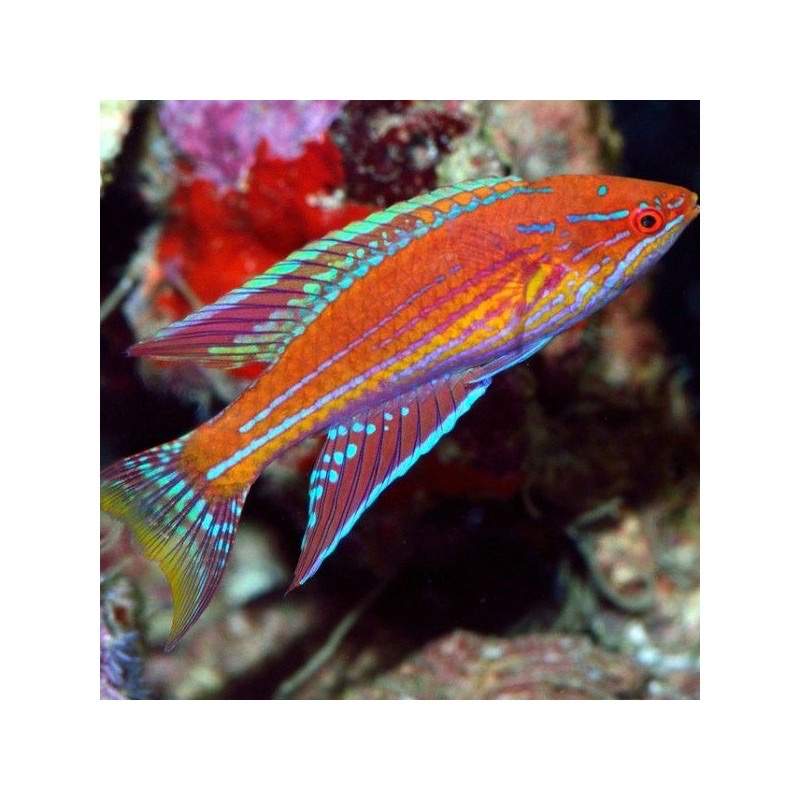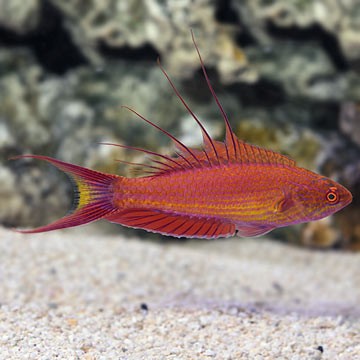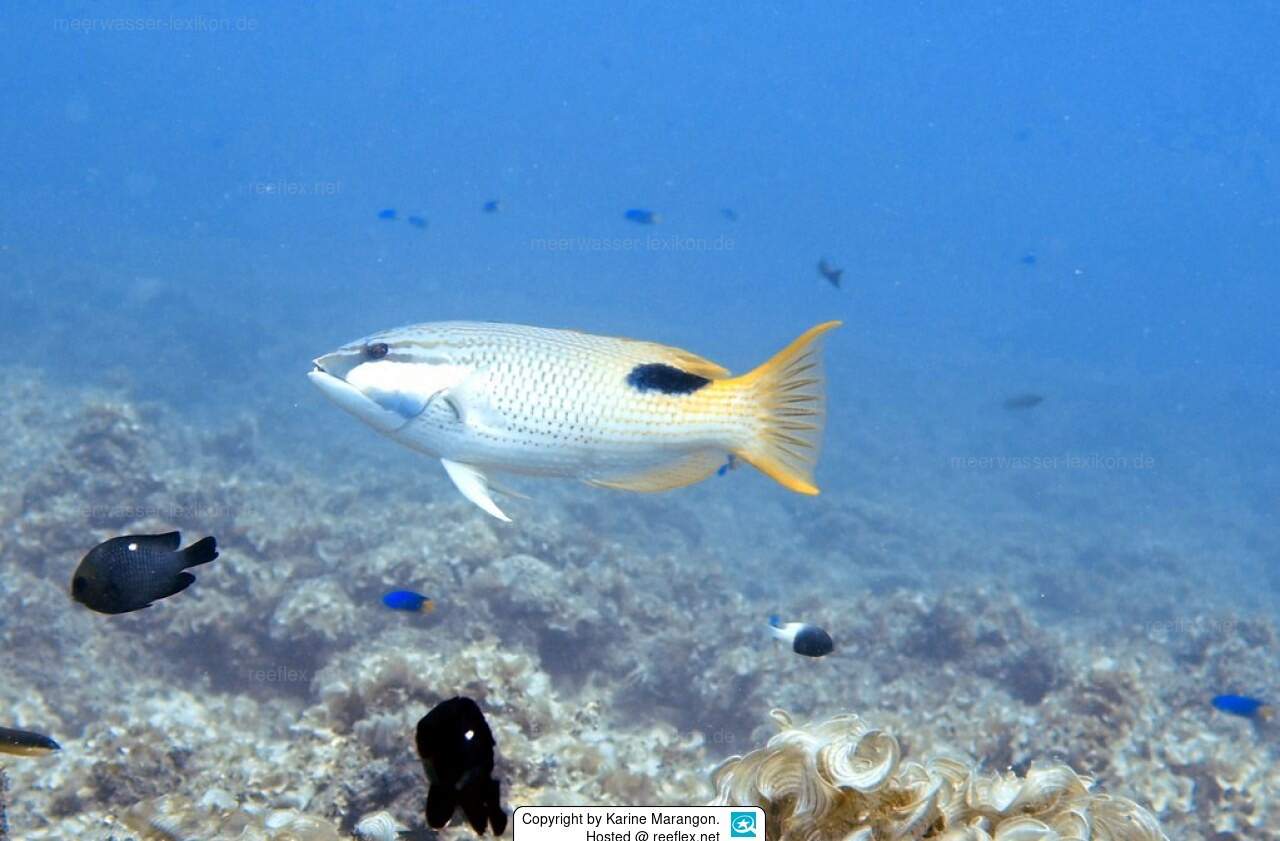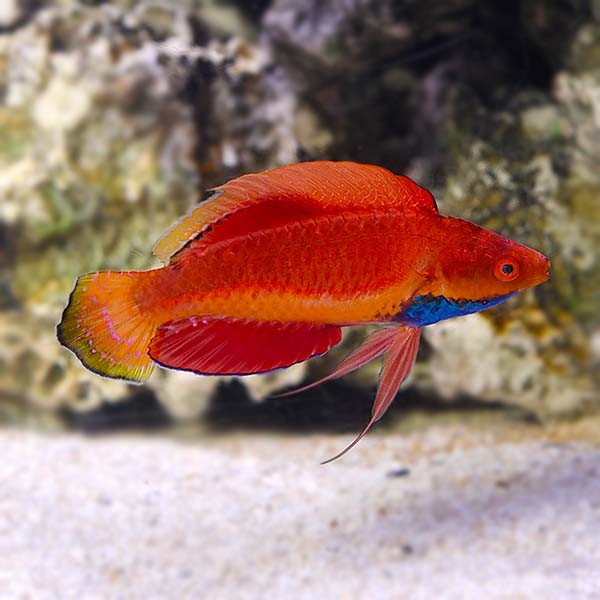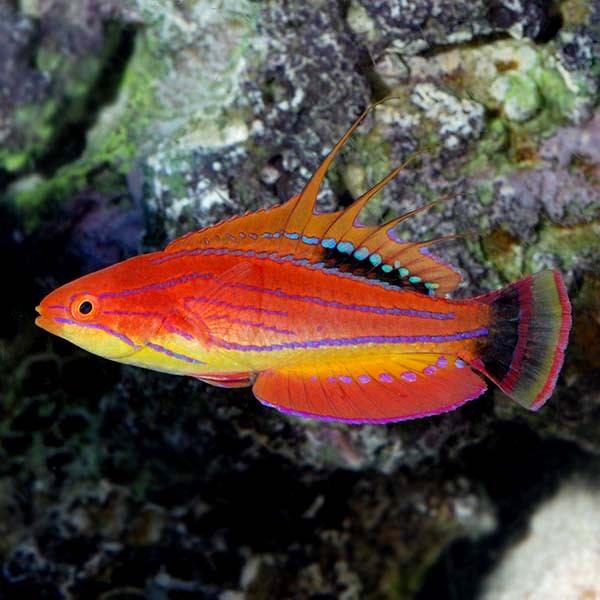
Blue Flasher Wrasse (Cirrhilabrus cyanopleura)
Fish in the family Labridae. Moderate care. Reef Safe.
Quick facts
Appearance
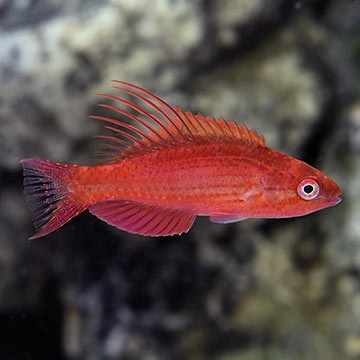
Small, slender wrasse with males displaying vibrant blue coloration on the face, head, and anterior body, contrasting with yellow-orange to red posterior sections. Females are more subdued, typically orange-red overall with blue markings less prominent. Both sexes exhibit the characteristic "flasher" behavior of rapidly displaying their bright colors, particularly during courtship.
Diet and feeding
Small zooplankton and meaty foods in the aquarium. Feed small frozen mysis shrimp, frozen copepods, and quality micro-pellet foods 2–3 times daily. They benefit from supplemental live copepod cultures if available.
Difficulty and care for the Blue Flasher Wrasse
Blue Flasher Wrasses are moderately challenging for hobbyists due to their small size, high metabolism, and preference for live copepods. They require a well-established reef with adequate food sources and stable water conditions. They are generally peaceful but may be outcompeted for food by more aggressive feeders.
Common health issues
Marine ich, Fin rot, Swim bladder disorder, Hole-in-the-head disease, Velvet disease
Origin and habitat
Indo-Pacific region, from Indonesia and the Philippines south to Australia and east to Fiji. Found in coral reef environments at depths typically between 10 and 60 meters.
Log Blue Flasher Wrasse in your reef tank
Reef Trak gives you the full record on every species in your tank: acquisition date, source, photos, parameters at time of stocking, and links to maintenance and feeding events. Track Blue Flasher Wrasse alongside everything else in your reef.
Related Fish